

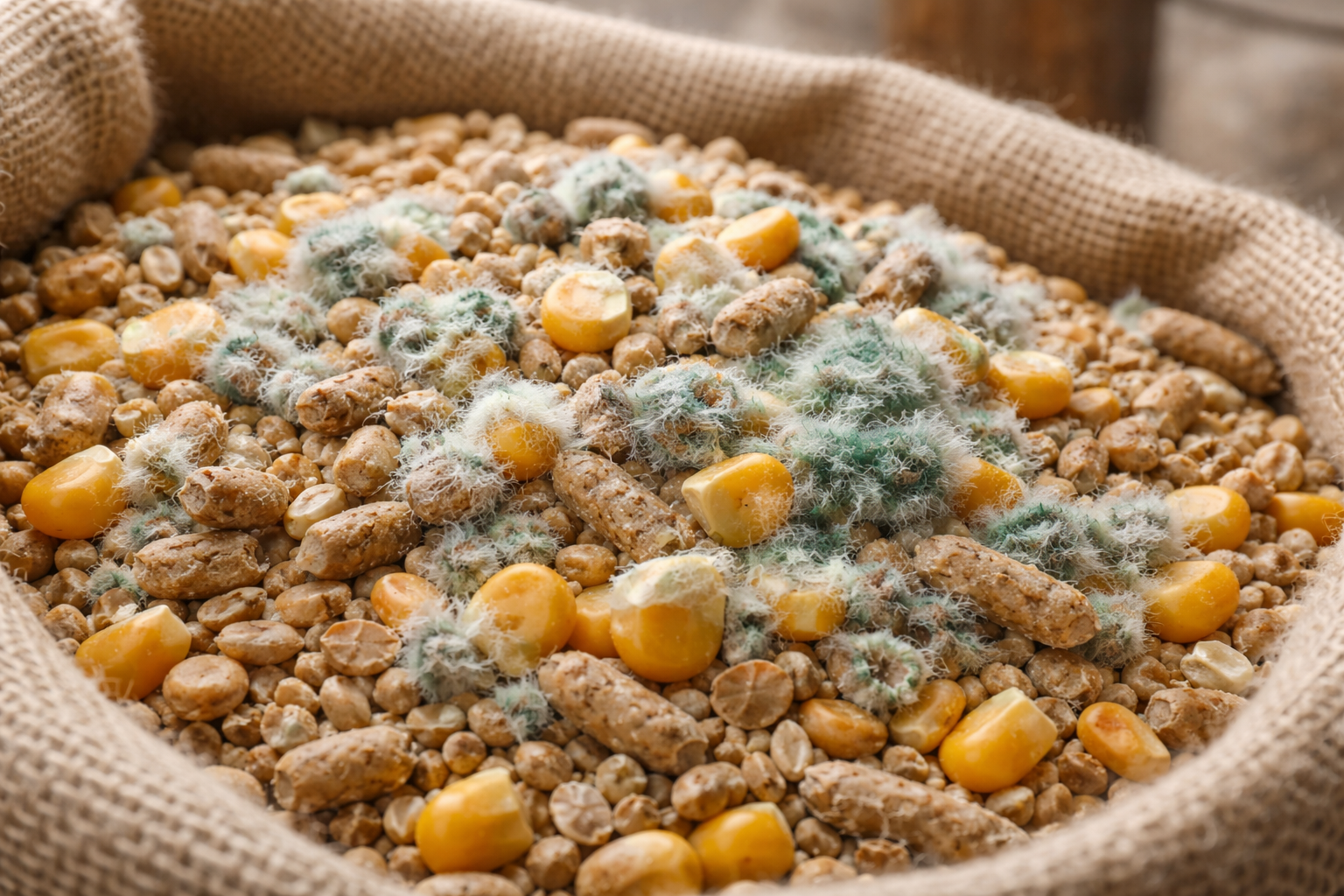
Mycotoxins in animal feed are not a marginal phenomenon but an omnipresent topic in modern livestock farming. Despite modern harvest, storage, and processing technologies, molds and their metabolic products cannot be completely avoided. This is exactly where the particular challenge lies: Mycotoxins often act in the background and unfold their negative effects insidiously, without causing immediately clearly recognizable symptoms.
Molds such as Fusarium, Aspergillus, or Penicillium can occur along the entire feed chain. Critical points here are not only the field but also harvest, transport, and storage. It is particularly problematic that mycotoxins rarely occur in isolation.
- Respiratory problems
- Respiratory problems
- Plant stress due to drought or pest infestation
- Improper storage of raw materials
- Long storage periods without quality control
In practice, contamination usually does not manifest itself through acute poisoning, but through gradual performance problems. Animals appear less vital, feed intake drops or falls short of expectations. Fertility disorders or increased susceptibility to disease can also be indications.
Frequently observed symptoms are:
- Reduced daily weight gain or milk yield
- Fluctuating performance within the herd
- Extended fattening or rearing periods
- Higher veterinary and treatment costs
Precisely these non-specific signs lead to mycotoxins often being recognized as the cause late. The economic losses do not arise suddenly but accumulate over weeks and months.
Effective mycotoxin management therefore relies on prevention and control. Regular analyses create transparency, while good storage hygiene and adapted ration formulation reduce the risk. In addition, functional feed ingredients can be used that bind mycotoxins in the digestive tract and reduce their bioavailability.
Central elements of sustainable management are:
- Regular monitoring of raw materials and compound feed
- Stable storage conditions
- Early detection of subclinical effects
- Preventive support of digestion
Mycotoxins cannot be completely eliminated, but they can be controlled in a targeted manner. Farms that actively manage this topic create a stable basis for animal health and long-term operational success.