

Klinosan®
Klinosan® is a zeolite-based mycotoxin binder for animal feed. The
feed additive combines activated clinoptilolite Klinofeed® with soluble
yeast components, nucleotides and RNA – developed for use during phases
of increased contaminant load in feed.
Clinoptilolite selectively binds contaminants such as ammonium (NH₄⁺),
mycotoxins and other undesirable compounds in the digestive tract. The
nucleotides and RNA contained in Klinosan® provide essential building
blocks for cell renewal and cell division – particularly in the liver,
intestine, reproductive organs and immune system. Klinosan® thus works
functionally on two levels: mineral binding in the gut and nutritional
supply of cellular building blocks.
Valuable nutrients and active substances are not affected by the selective
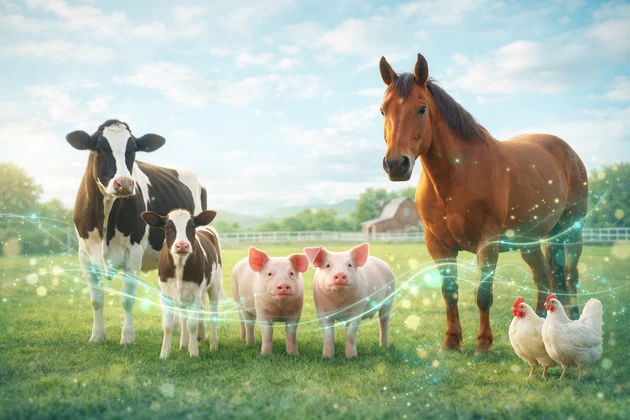
binding. Klinosan® integrates seamlessly into existing feeding regimes –
for pigs, cattle, poultry and horses.
Klinosan® is EU-authorised (clinoptilolite 1g568) and manufactured under
GMP+ conditions at Unipoint AG’s Swiss production site. Over 35 years of
experience with clinoptilolite in animal nutrition.
Function
-

Binds mycotoxins in the digestive tract
-

Binds ammonium and relieves metabolism
-

Provides nucleotides and RNA as cellular building blocks
-

Suitable for phases of increased demand
-

Selective binding – preserves valuable nutrients
How Klinosan® works
Klinosan® combines two functional principles in one product: mineral
binding in the gut and nutritional supply of cellular building blocks.
The activated clinoptilolite (Klinofeed®) it contains selectively binds
contaminants such as ammonium (NH₄⁺) as well as mycotoxins such as DON
(deoxynivalenol), ZEA (zearalenone) and aflatoxins in the digestive
tract. The binding capacity of clinoptilolite for these substances is
documented in numerous scientific studies (¹,²,³). Valuable nutrients
and active substances such as vitamins, trace elements and amino acids
are not affected by the selective structure of clinoptilolite.
The nucleotides and RNA additionally contained are essential building
blocks for cell division and cell renewal. They are required in
particular when the organism’s own synthesis faces increased demand –
for example during phases of intensive cell division, impaired liver
function or high metabolic load. External supply provides the building
blocks that the organism needs to stabilise physiological processes.
Clinoptilolite of sedimentary origin is authorised as a feed additive
in the EU (1g568, Regulation EC 1831/2003) and is considered safe by
EFSA assessment for all animal species at dosages up to 10,000 mg/kg
feed.
Klinosan® thus works on two levels: in the gut through mineral binding
of contaminating substances, and at the cellular level through
nutritional supply of building blocks for cell renewal.
Scientific Basis
¹ EFSA FEEDAP Panel (2013): Scientific Opinion on the safety and
efficacy of clinoptilolite of sedimentary origin for all animal species.
EFSA Journal 11(1):3039.
https://doi.org/10.2903/j.efsa.2013.3039
² EFSA FEEDAP Panel (2025): Safety and efficacy of the feed additive
consisting of clinoptilolite of sedimentary origin for all animal
species for the renewal of its authorisation.
EFSA Journal 23(4):9364.
https://doi.org/10.2903/j.efsa.2025.9364
³ Vekiru, E. et al. (2014): In vitro binding assessment of zearalenone
by various adsorbents. World Mycotoxin Journal 8(4):477-488.
https://doi.org/10.3920/WMJ2014.1789
⁴ Tomasevic-Canovic, M. et al. (2001): The effect of exchangeable
cations in clinoptilolite and montmorillonite on the adsorption of
aflatoxin B1. Journal of the Serbian Chemical Society 66(8):555-561.
EU authorisation as a technological feed additive: Clinoptilolite of
sedimentary origin (1g568), Regulation (EC) No 1831/2003, functional
group 1g (binders) and 1i (anticaking agents).
Application
Mycotoxins in cereals and corn place a particularly high burden on your pig herd. DON leads to feed refusal and reduced daily weight gain, ZEA causes returns to oestrus, abortions and fertility disorders in sows. Aflatoxins damage liver and immune system.
Klinosan® binds these mycotoxins in the digestive tract before they can take effect. The combination of activated clinoptilolite and nucleotides additionally supports cell renewal in liver, intestine and reproductive organs – exactly where sows, piglets and fattening pigs need it most during critical phases.
Suitable for: sow husbandry, piglet rearing, fattening operations, closed herds
Recommended dosage:
- Sows (gestating & lactating): 0.5 % in complete feed
- Prestarter (suckling piglets): 2.0 % in complete feed
- Piglet rearing: 1.0 % in complete feed
- Fattening pigs: 0.5 % in complete feed
In case of increased contaminant load in the feed, the dosage can be doubled. Klinosan® can be easily incorporated into the existing mineral feed mixture or directly into the daily ration.
Corn and wheat in poultry feed are particularly susceptible to mycotoxins. Aflatoxins from corn affect liver and immune system, DON reduces feed intake and daily weight gain. In laying hens, eggshell problems and drops in laying performance can occur.
Klinosan® binds these mycotoxins in the digestive tract and simultaneously relieves the metabolism through ammonium binding – a double benefit at high stocking densities and during heat periods, when barn climate and animal health come under pressure.
Suitable for: laying hen operations, broiler fattening, turkey fattening, rearing operations
Recommended dosage:
- Laying hens: 0.5 – 1.0 % in complete feed
- Broilers: 0.5 % in complete feed
- Turkeys: 0.5 – 1.0 % in complete feed
- Rearing phase: up to 1.5 % in complete feed
In case of increased contaminant load in the feed, the dosage can be adjusted. Klinosan® additionally supports pellet quality and flow properties of the mixture.
Variable silage quality, mould-affected hay or rain-damaged corn – mycotoxin contamination in roughage is often hard to control in cattle. Consequences: declining milk yield, fertility issues, elevated somatic cell counts, digestive disorders in calves.
Klinosan® binds mycotoxins such as DON, ZEA and aflatoxins in the rumen and digestive tract and additionally relieves the metabolism through ammonium binding – important for high-performance dairy cows during lactation phases and for calves in the first weeks of life, when the digestive tract is particularly sensitive.
Suitable for: dairy farms, suckler cow husbandry, beef cattle, calf rearing, organic farms
Recommended dosage:
- Dairy cows: 100 – 200 g per animal and day
- Beef cattle: 50 – 100 g per animal and day
- Calves: 20 g per animal and day (from first feeding)
- Young cattle: 30 – 50 g per animal and day
Klinosan® can be added to the total mixed ration (TMR), to the mineral feed or as a top dressing directly on the feed.
Horses respond sensitively to mycotoxins in hay, oats or muesli. Even high-quality hay batches can be contaminated with mould toxins under humid storage conditions. Consequences: liver burden, digestive issues, reduced performance readiness in sport and breeding horses.
Klinosan® binds these mycotoxins in the digestive tract and supports cell renewal in liver and intestine with additional nucleotides – particularly relevant during intensive training phases, stable housing with limited movement or suspected contaminated roughage.
Suitable for: sport and competition horses, breeding operations, livery yards, rearing of foals and young horses
Recommended dosage:
- Sport horses & large horses: 80 – 100 g per animal and day
- Ponies & small horses: 40 – 60 g per animal and day
- Foals & young horses: 20 – 40 g per animal and day
Klinosan® can be mixed with normal concentrate feed or given as supplementary feed. For long-term use, we recommend individual consultation.
Request consultation for your horses →
Mycotoxins in cereals and corn place a particularly high burden on your pig herd. DON leads to feed refusal and reduced daily weight gain, ZEA causes returns to oestrus, abortions and fertility disorders in sows. Aflatoxins damage liver and immune system.
Klinosan® binds these mycotoxins in the digestive tract before they can take effect. The combination of activated clinoptilolite and nucleotides additionally supports cell renewal in liver, intestine and reproductive organs – exactly where sows, piglets and fattening pigs need it most during critical phases.
Suitable for: sow husbandry, piglet rearing, fattening operations, closed herds
Recommended dosage:
- Sows (gestating & lactating): 0.5 % in complete feed
- Prestarter (suckling piglets): 2.0 % in complete feed
- Piglet rearing: 1.0 % in complete feed
- Fattening pigs: 0.5 % in complete feed
In case of increased contaminant load in the feed, the dosage can be doubled. Klinosan® can be easily incorporated into the existing mineral feed mixture or directly into the daily ration.
Corn and wheat in poultry feed are particularly susceptible to mycotoxins. Aflatoxins from corn affect liver and immune system, DON reduces feed intake and daily weight gain. In laying hens, eggshell problems and drops in laying performance can occur.
Klinosan® binds these mycotoxins in the digestive tract and simultaneously relieves the metabolism through ammonium binding – a double benefit at high stocking densities and during heat periods, when barn climate and animal health come under pressure.
Suitable for: laying hen operations, broiler fattening, turkey fattening, rearing operations
Recommended dosage:
- Laying hens: 0.5 – 1.0 % in complete feed
- Broilers: 0.5 % in complete feed
- Turkeys: 0.5 – 1.0 % in complete feed
- Rearing phase: up to 1.5 % in complete feed
In case of increased contaminant load in the feed, the dosage can be adjusted. Klinosan® additionally supports pellet quality and flow properties of the mixture.
Variable silage quality, mould-affected hay or rain-damaged corn – mycotoxin contamination in roughage is often hard to control in cattle. Consequences: declining milk yield, fertility issues, elevated somatic cell counts, digestive disorders in calves.
Klinosan® binds mycotoxins such as DON, ZEA and aflatoxins in the rumen and digestive tract and additionally relieves the metabolism through ammonium binding – important for high-performance dairy cows during lactation phases and for calves in the first weeks of life, when the digestive tract is particularly sensitive.
Suitable for: dairy farms, suckler cow husbandry, beef cattle, calf rearing, organic farms
Recommended dosage:
- Dairy cows: 100 – 200 g per animal and day
- Beef cattle: 50 – 100 g per animal and day
- Calves: 20 g per animal and day (from first feeding)
- Young cattle: 30 – 50 g per animal and day
Klinosan® can be added to the total mixed ration (TMR), to the mineral feed or as a top dressing directly on the feed.
Horses respond sensitively to mycotoxins in hay, oats or muesli. Even high-quality hay batches can be contaminated with mould toxins under humid storage conditions. Consequences: liver burden, digestive issues, reduced performance readiness in sport and breeding horses.
Klinosan® binds these mycotoxins in the digestive tract and supports cell renewal in liver and intestine with additional nucleotides – particularly relevant during intensive training phases, stable housing with limited movement or suspected contaminated roughage.
Suitable for: sport and competition horses, breeding operations, livery yards, rearing of foals and young horses
Recommended dosage:
- Sport horses & large horses: 80 – 100 g per animal and day
- Ponies & small horses: 40 – 60 g per animal and day
- Foals & young horses: 20 – 40 g per animal and day
Klinosan® can be mixed with normal concentrate feed or given as supplementary feed. For long-term use, we recommend individual consultation.
Request consultation for your horses →
Nucleotides
Nucleotides as Cellular Building Blocks
Nucleotides are constituent elements of DNA and RNA and are
therefore central to cell division and cell renewal. Cells with
high turnover rates – such as cells of the digestive tract and
components of the immune system – have a correspondingly high
nucleotide requirement, which endogenous synthesis cannot fully
cover at every stage of life.
A substantial share of the body’s own nucleotides is provided by
the liver. Synthesis capacity depends on the functional state of
the liver. During phases of elevated demand – intensive growth,
cell renewal or high metabolic load – external nucleotide supply
through feed can complement endogenous production.

Liver Function and Nucleotide Supply
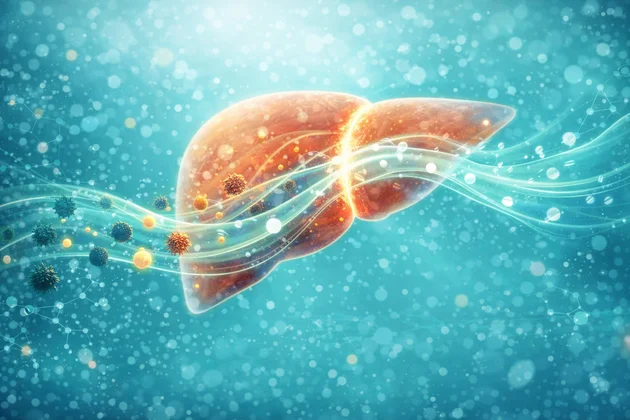
The liver is the central hub for key metabolic processes: it
receives substances absorbed in the gut via the portal vein,
restructures fats, produces plasma proteins and metabolises
compounds foreign to the body. These tasks involve a high level
of cellular activity and a corresponding nucleotide turnover.
Supplying nucleotides through feed provides the organism with
building blocks needed for its physiological processes and
thereby complements endogenous nucleotide synthesis –
particularly during phases of elevated metabolic load.
Application
External nucleotide supply via feed is particularly useful during
life stages and stress phases in which the nucleotide requirement
is elevated: growth, the period around weaning, the period around
parturition, as well as under high performance demands or
intensive cell renewal.
The nucleotides used are derived from non-living yeast cells and
can be combined with the customary components of animal nutrition.
The use of nucleotides in livestock feeding is the subject of
numerous feeding trials.
Klinosan® by Unipoint combines activated clinoptilolite
(Klinofeed®, 1g568) with nucleotides and RNA – a Swiss feed
additive uniting mineral binding in the digestive tract and the
supply of cellular building blocks in a single product.